Irish landscape photography: chasing light in a country with none
By Amy Byrne · · 6 min read
Ireland gives you flat grey light most of the year. The trick is knowing the three short windows when it does not, and being outside for them.
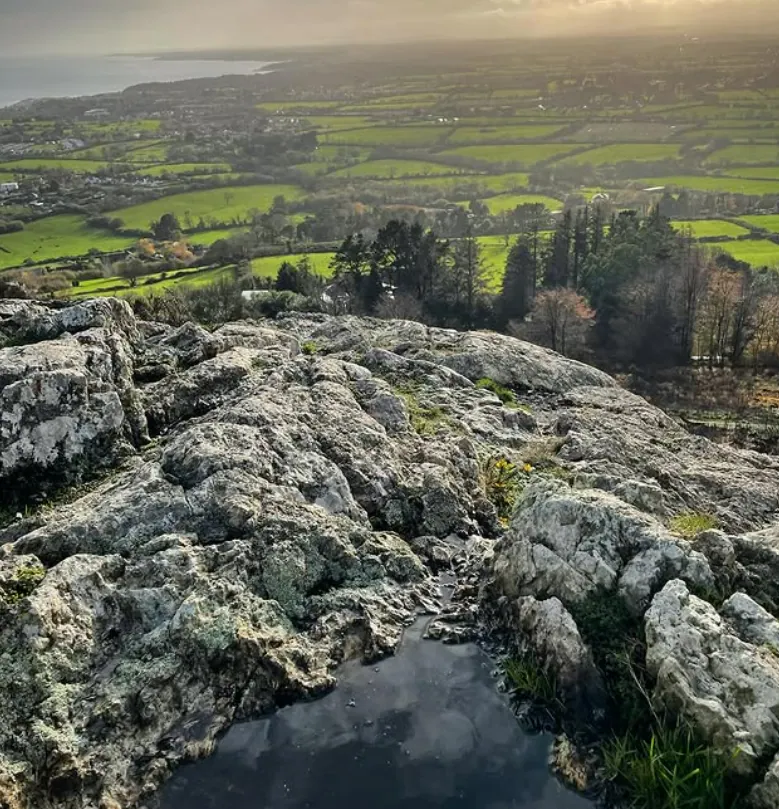
People assume landscape photography here is about scenery. It is not — the scenery is always there. It is about being outdoors during the twenty minutes when the light is doing something.
The three windows
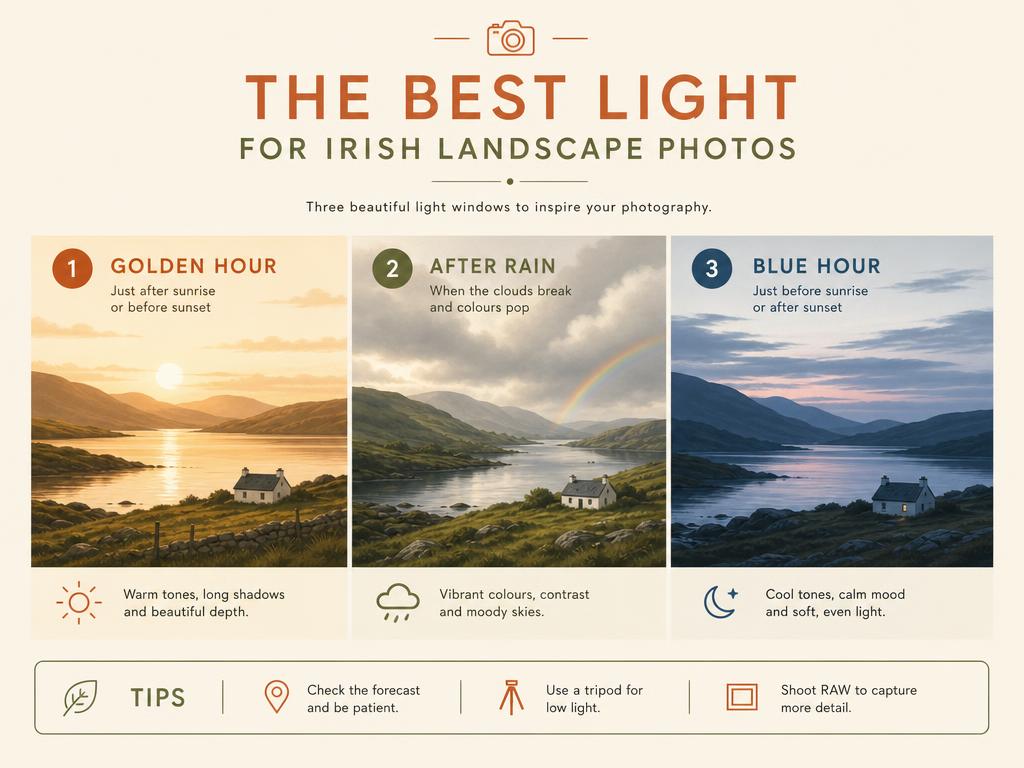
Golden hour. The hour after sunrise and before sunset. Low sun rakes across the fields, hedges throw long shadows and everything picks up a warm cast. In Irish summer that means being up at half four; in December it is a civilised half three in the afternoon. Most of the warm-toned images in the landscape collection are from this window.
The twenty minutes after rain. This is the one that is specific to here, and the one people miss because they are inside waiting for it to stop. When a shower clears, the air is washed clean, the grass is saturated, and the sky behind the departing cloud is usually dramatic. Rainbows only exist in this window.
Blue hour. The half hour after the sun has gone. Cool, quiet, low contrast. It is unforgiving on a small screen and it prints beautifully — the tonal range is gentle, so a big print looks calm rather than busy.
Flat grey days
Eight months of the year you get flat white cloud, which is a giant softbox and useless for grand vistas. Use it differently:
- Get closer. Detail beats vista in dull light — gorse, a gate, a single tree, an animal.
- Look for colour instead of contrast. Wet tarmac, yellow whin, orange bracken in autumn.
- Shoot for black and white. Flat light with a strong shape in it converts very well. All prints here can be made in black and white at no extra cost.
Settings that matter
- f/8–f/11 for landscape depth. Wider than f/5.6 and the far hedge goes soft.
- Lowest usable ISO. Noise is very visible in large flat skies once you print at 16×24″.
- Bracket exposures in a bright sky over a dark field. You cannot recover a blown sky.
- Shoot RAW if you intend to print. JPEG throws away the sky detail you will want later.
Which frames actually print
Not all of them. An image that reads well on a phone can fall apart at 16×24″. What survives:
- A clear subject — a road, a tree, a horse — rather than a general view
- Clean skies with real gradient in them
- A colour palette that will sit in a room: warm gold, muted green, grey-blue
If you are choosing a landscape for a wall rather than shooting one, the print size guide covers what size suits each room, and the living room guide covers sizing against furniture.
Prints
Every landscape here is available from €10 unframed, or +€15 framed in oak, in four sizes, excluding postage. Half of every order goes to Forever Home Sanctuary.
See the landscape prints or the full shop.
Frequently asked
- What is the best light for landscape photography in Ireland?
- Three windows: golden hour just after sunrise and before sunset, the twenty minutes after a shower clears, and blue hour just after the sun goes down. Flat grey daylight suits closer detail shots and black and white.
- What camera settings suit Irish landscapes?
- f/8 to f/11 for depth, the lowest usable ISO because noise shows in large skies, bracketed exposures when the sky is much brighter than the ground, and RAW if you intend to print.
- Why do some photos look good on a phone but bad as a print?
- Large prints reveal noise, soft focus and flat skies. Images with a clear subject, real gradient in the sky and a restrained colour palette hold up best at 16×24″.
- Where were these landscape photographs taken?
- In the Irish countryside around the fields, roads and hills near the sanctuary — everyday landscape rather than famous viewpoints.
More guides
- Wall art room by room: nursery, home office and hallway
Which prints suit a nursery, a home office and a hallway — sizes, subjects, heights and colours for the three rooms people leave until last.
- How to photograph your dog (and get one worth framing)
Practical dog photography tips — get down low, use the right light, freeze movement, keep their attention, and how to tell if a phone photo will print well.
- Christmas gifts in Ireland: order dates and gift ideas that keep
Irish Christmas gift planning — last order dates for prints, what to buy for hard-to-buy-for people, budgets by relationship and how to gift a print well.